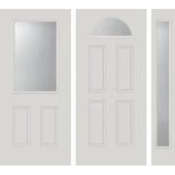
Surface Textures Available for This Door
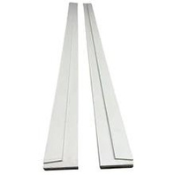
Satin Smooth (white) features a fine linear texture with subtle vertical lines, similar to a woven linen or brushed fabric. This micro-texture provides built-in surface tooth that helps primer and paint adhere without the need for heavy sanding, reduces the visibility of brush marks and roller lines, and helps prevent runs and drips on vertical surfaces. Professional painters and DIY homeowners alike benefit from a surface that is designed to hold paint evenly and deliver a refined, consistent finish. The Satin Smooth texture is optimized for painted finishes. For a traditional wood-like stained appearance, a woodgrain texture is recommended.
Fine Grain Woodgrain (tan) features an embossed surface with a tighter, more delicate grain pattern that creates a refined, understated wood-like appearance enhancing the clean aesthetics of contemporary and modern home styles. The Fine Grain pattern is not species-specific, allowing it to accept a wide range of stain colors to echo the look of various wood species and match existing trim, cabinetry, or architectural elements around your home. The finer texture produces a softer, more subdued stained appearance, making it a popular choice for homeowners who want a hint of natural wood character without a pronounced grain pattern. The Fine Grain texture is designed for staining to showcase the woodgrain detail, and can also be painted for a solid color finish.
Select your preferred texture using the variant options above.
Finishing Smooth Fiberglass Doors
Before finishing, clean all door surfaces to remove dust, oils, and handling residue, then allow the surface to fully dry. For best results, we recommend using a high-quality bonding primer such as Sherwin-Williams Extreme Bond Primer, followed by a premium exterior-grade acrylic latex paint.
All six sides of the door must be finished, including the front, back, top, bottom, and both edges, to properly protect the door and maintain warranty coverage. When selecting paint colors, lighter to medium shades are typically recommended for doors exposed to direct sunlight, as very dark colors can increase surface temperatures and reduce long-term finish performance.
Fiberglass doors are shipped unfinished or factory-primed depending on selected options. Finishing should be completed promptly after delivery and before prolonged exposure to weather.
Finishing Woodgrain Fiberglass Doors
Woodgrain fiberglass doors are typically finished using a gel stain or an opaque, heavily pigmented oil-based stain suitable for fiberglass or other non-porous surfaces. These stain types remain on the surface rather than soaking into the material, allowing the molded woodgrain texture to show through while creating a rich, even color. Traditional penetrating wood stains are not recommended for fiberglass doors, as they are designed to absorb into wood fibers rather than bond to fiberglass surfaces.
After staining, apply a polyurethane top-coat with UV inhibitor to seal and protect the finish. This protective topcoat is essential for preventing fading, moisture intrusion, and weather-related damage while enhancing the depth and appearance of the woodgrain texture.
Woodgrain fiberglass doors may also be painted if a solid color finish is desired. When painting a woodgrain surface, always apply a bonding primer such as Sherwin-Williams Extreme Bond Primer before painting to ensure proper adhesion and long-term finish performance. As with smooth fiberglass doors, all six sides must be finished to properly protect the door and maintain warranty coverage.